A space to develop the full range of my pedagogical interests, for the benefit of all future students and colleagues.

Thursday, August 23, 2012

The Louisiana Purchase, or, the Unrecognized Benefit the Haitian Revolution had on the United States


The Haitian Revolution

We all know about the Louisiana Purchase – one of those many parts of American history that are obviously important but just not that interesting.  What high school students tend to hear is that France had a bunch of land it wasn’t really using, and needed some quick cash to fight some wars and so sold that land to the US.  Thus President Jefferson was credited with doubling the size of the United States, and then Lewis and Clark went on their famous expedition to find wooly mammoths.   

The real story is pretty interesting.  Jefferson was elected in 1801, at which point Spain owned Louisiana.  Spain was troubled by America’s growing western population because it had lucrative silver mines in Mexico, and used the vast land of Louisiana as a buffer to keeper western settlers out.  However, Spain’s hold on the West was weak, and it worried that it was not strong enough to keep western migration at bay.  Within months of Jefferson's election, Spain sold Louisiana to France, knowing that France was strong enough to keep American settlers out of Louisiana.

Napoleon was interested in Louisiana primarily because it could provide resources for its sugar colony, San Dominique… soon to be known as Haiti.  France grew 70% of its sugar in Haiti, using slave-labor practices that made slavery in America pale in comparison.  This sugar was sold around Europe to great profit.  In 1801, Napoleon sent a force of forty thousand troops to crush the revolution led by ToussaintL’Ouverture - a man I would want all my students to learn about - but Napoleon's army was incapacitated by tropical disease, with 4,000 of his men dying to this cause alone.  Napoleon abandoned the island and sold Louisiana, now useless to him, to Jefferson.
ToussaintL’Ouverture, leader of the Haitian revolution
The ironic side of this story is that the liberation of Haiti, which terrified many Americans, played a large role in strengthening the United States beyond what it could have possibly hoped for.  In fact, when France first purchased Louisiana from Spain, Jefferson immediately dispatched diplomats to France to avoid war: after all, Napoleon was in the middle of empire building on a massive scale and was interested in the Americas.  Americans could tolerate a weak Spain on its doorstep.  But a powerful France, which at that very moment seemed capable of conquering the continent of Europe...?   

Thus the liberation of Haiti played a role in helping the United States double its size and avoid war with a great European power.  Human beings, however, have a remarkable capacity to notice their difficulties to the point of being blind to their blessings.  All that was noticed at the time was that the liberation of Haiti had showed the possibility of successful slave rebellions.  And indeed, the news spread like wildfire throughout slave communities in the United States; plans for slave rebellions were hatched and a few just barely thwarted.  The South entered a period of increased fear of their slaves, and as is so common in history, increased fear was accompanied by increased repression.  Talk of gradual emancipation quickly eroded.  The North and the South drifted farther apart, as they would continue to do for decades....  

For the story of the Haitian Revolution, see Avengers of the New World.  

Thursday, August 2, 2012

Presidential compromises, forgotten conservatives

The full time, never-ending, exhausting search for work has meant that I haven't been nearly as productive this summer as I would have hoped.  A few research projects have fallen through the cracks.  And I haven't been paying attention to politics.  I was hoping to read a few books on presidential politics in order to get a better grasp on what goes on during campaign season: the strategies, compromises, and complexities that go on underneath what frustratingly appears as no more than rhetorical demagoguery, purposeful obfuscation, and misinformation for the sake of one-upmanship rather than the public good. 


While looking these books up, I discovered the Hauenstein Center, which has some great YouTube videos of lectures on the presidency.  In the videos posted below, Dr. Gleaves Whitney gives a half hour talk on why so many conservatives broke from Bush before the recession and before the war.  Whitney reminds us that that in American history, opinion leaders who originally support a president often break with him.  He traces this phenomenon back to the first presidency, with Jefferson famously splitting from George Washington.  During the second presidency, Hamilton led federalists in splitting from Adams, who was judged to not be federalist enough.  As we have so often seen in American history, this fracturing led to the election of the opposition party: Hamilton unwittingly helped his arch-nemesis, Jefferson, take office.   The most famous split in the 20th century was of liberals splitting from Johnson over his Vietnam War policies; once again, this was a major factor in the success of the Republican nominee, Richard Nixon.   

Whitney points to four main reasons for these splits, one of which is that supporters are almost always let down by the necessity of compromise, which must occur not only between democrats and republicans, but between the left and right wings of both parties.  One of my sorest areas of ignorance is in understanding the nature of Obama's own compromises, which of course have shattered the Left's faith in him and de-energized his administration and campaign.  However, Whitney's talk, being about Bush and the conservatives who lost faith in him, reminded me of the many sides of conservatism in this country that we just don't hear enough about.  

It's common knowledge that fiscal conservatives split when Bush increased federal spending on education for No Child Left Behind and expanded Medicare.  But terribly under-discussed is the fact that a large demographic of foreign policy conservatives, represented by William Buckley and Andrew Bacevich, split with Bush, even before the invasion of Iraq.  They believed that neocon imperialist visions of "democratizing" complex societies were ungrounded, reckless, utopian pipedreams.  Similarly under-discussed are the cultural conservatives who split, including many intellectuals like Jeffrey Hart.  While cultural conservatism in the United States is often associated with the religious right, Hart represents a significant demographic of cultural conservatives that felt totally alienated by Bush: conservatives who considered evangelicals to be unreasonable people with emotionally driven politics.  Such conservatives often thought that Evangelical campaigns, such as the "right to life," were laudable but unwinnable battles and thus a waste of energy.  

All of these groups that split considered themselves realists, and accused the administration of being driven by emotional utopianism.  Speaking of the shift of conservative power to the South in the 1960's, Hart has harsh, even prejudicial words that highlight this split and his sense of alienation: "The consequences of that profound shift [for the conservative identity] are evident, especially with respect to prudence, education, intellect and high culture."  The conservative guardians of realism and of high culture - those who favor students continuing to study the canon from Plato to Shakespeare, and value an intellectual approach to the Bible, for example - continue to feel left out in the cold.  An extraordinarily large number of them voted for Obama.  

The following videos, in three parts, are titled "Conservatives vs. Bush".  The speaker is scholar Gleaves Whitney.  


Sunday, July 8, 2012

Indonesian eruptions, western migration


 In 1815, a volcanic eruption in Indonesia caused massive Western migration in the United States... 

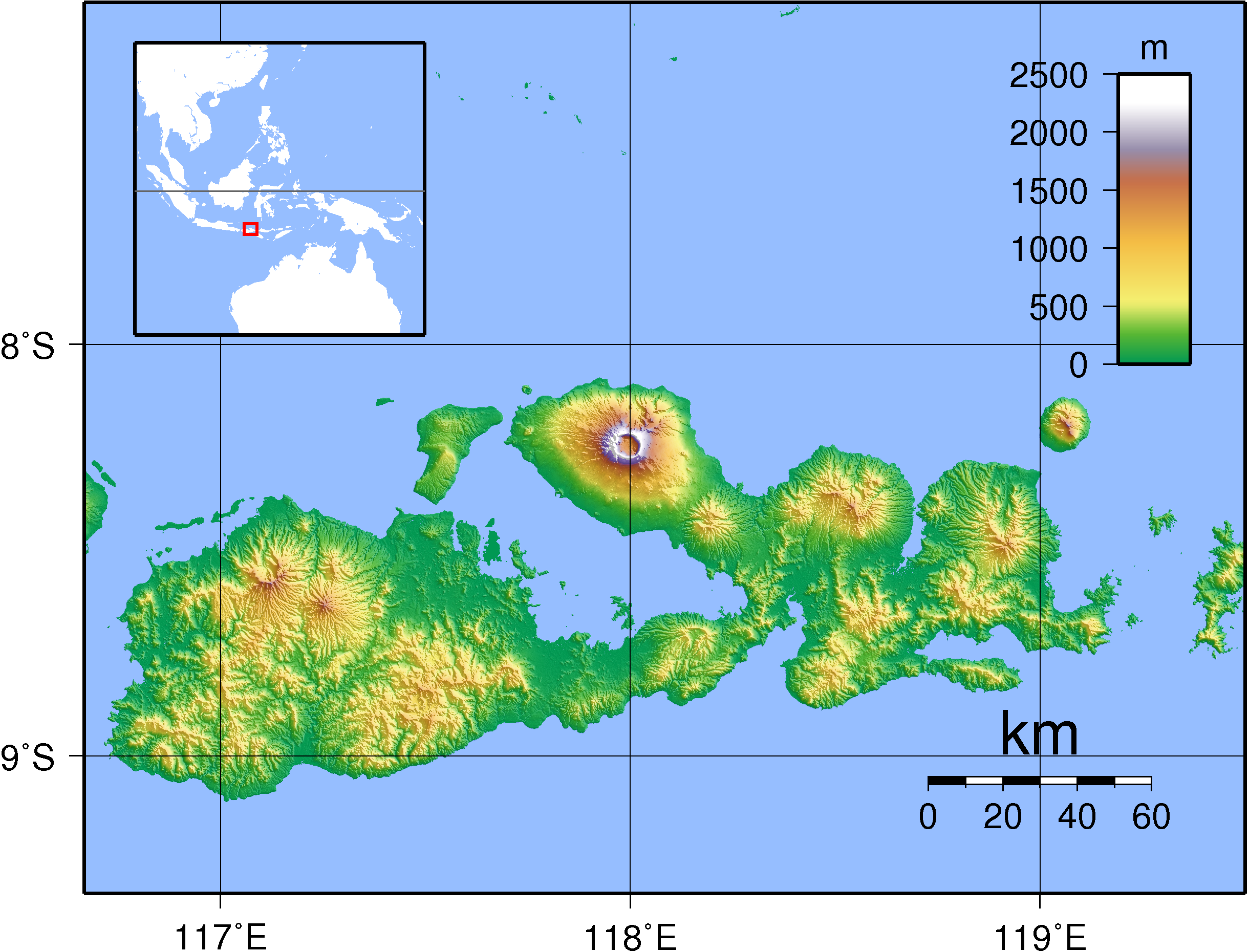
Mount Tambora’s eruption remains the largest in recorded history.  The explosion led to 70,000 – 90,000 deaths in the area, primarily due the destruction of local agricultural systems.  It was heard 1,200 miles away in Sumatra.  

File:Sumbawa Topography.png
Tambora's location in Indonesia

 However, the eruption also led to global climate effects, including an effect known as volcanic winter, in which volcanic ash blocks the sun while sulfuric acid droplets absorb and reflect the suns radiation. 

Caldera Mt Tambora Sumbawa Indonesia.jpg
Mount Tambora


 During the summer of 1816, the volcanic winter led to snow falling across New England throughout the entire summer, with summer frosts further south.  Hungry and despairing families turned west in droves, some of them worried that “the year without a summer” was an apocalyptic sign... 

Here are some wild apocalyptic-volcanic images.  Volcanic eruptions can also spawn lightning storms as colliding particles build up electrical charges.